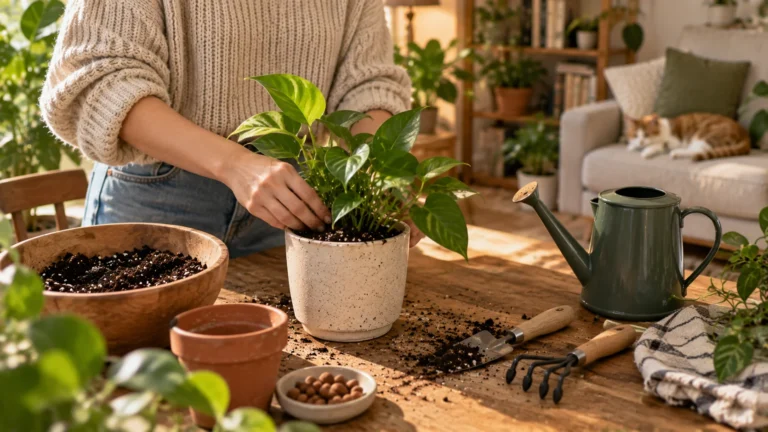
Indoor Plants can be a simple way to bring greenery into small spaces, especially when you choose varieties that stay compact and suit the size of your planter.
Small planters can be surprisingly useful for indoor gardening. They fit neatly on desks, shelves, windowsills, and other places where a larger pot simply feels out of place. The trick is choosing a plant that suits both the container and the conditions around it.
If you’re just getting started, you don’t necessarily need a large plant collection. As we covered in our Indoor Gardening Guide for Beginners, starting with a few indoor plants that fit your space can make indoor gardening much easier to manage.
So, what are the best indoor plants for small planters?
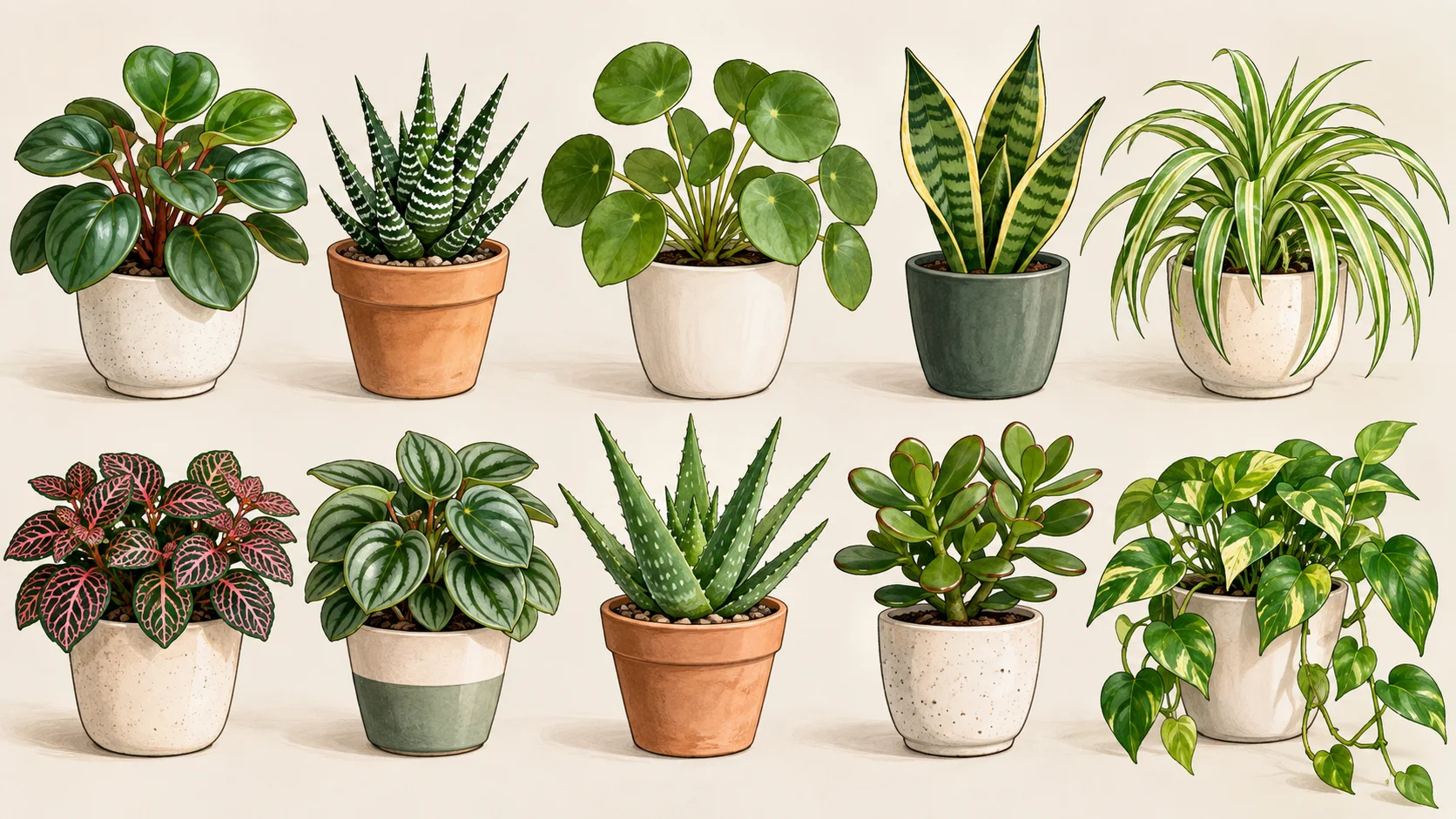
Here are ten options worth considering.
What Makes a Plant Suitable for a Small Planter?
Before choosing a plant, look beyond how small it appears at the garden center.
A young plant may fit perfectly into a tiny pot but eventually become much larger. For a small planter, compact growth, a manageable root system, and a plant’s ability to handle container growing are generally more useful qualities.
Light matters just as much.
A small planter cannot make up for a poor location, so try to match the plant to the light you actually have rather than choosing solely by appearance.
10 Best Indoor Plants for Small Planters
1. Peperomia
Peperomia is one of the more natural choices for a small planter. Many varieties have compact growth and attractive foliage without demanding a large floor footprint.
They can work nicely on desks, shelves, or windowsills where you want something leafy without creating a large visual mass.
Light requirements vary by variety, so check the particular plant before placing it in a darker corner.
2. Haworthia
If you prefer something small and sculptural, Haworthia is worth considering.
These compact succulents can fit comfortably into small containers and generally prefer a bright location. Their structured leaves also make them look intentional even when placed alone on a desk or shelf.
The main consideration is avoiding a watering routine that keeps the growing medium constantly wet.
3. Pilea Peperomioides
Often recognized by its round, coin-like leaves, Pilea peperomioides can make an appealing tabletop plant.
It does eventually produce offsets, so a small planter may not remain its final home forever. Still, when young and compact, it works well in smaller indoor spaces.
It is a good choice if you like plants with a distinctive shape rather than trailing foliage.
4. Mini Snake Plant
Snake plants are often associated with larger floor pots, but compact forms such as the ‘Hahnii’ type are much more suitable for small containers.
Their upright shape also makes them useful when you want greenery without taking up much horizontal space.
They are often considered forgiving plants, but that should not be confused with being able to grow without suitable light or drainage.
5. Baby Spider Plant
Spider plants can eventually become fairly full, but smaller plants and young offsets can work well in compact planters.
Their narrow leaves give a small pot a lighter appearance, and the plant can eventually produce offsets of its own.
If your goal is a plant that changes over time rather than staying exactly the same size, this can be an enjoyable option.
6. Fittonia
Fittonia, sometimes called nerve plant, is known for its patterned leaves and relatively compact growth.
It can be particularly attractive in a small decorative planter because its foliage provides visual interest without requiring a large container.
Unlike succulents, Fittonia generally appreciates more consistent moisture, so it may suit someone who prefers checking plants regularly.
7. Small Peperomia Varieties
There are many different peperomias, and their growth habits can vary considerably.
Compact varieties such as baby rubber plant and watermelon peperomia can work particularly well in small indoor spaces.
Their leaves provide plenty of character without needing a large pot, making them a practical choice for shelves and desks.
8. Miniature or Compact Aloe
Aloe can be another option for a sunny windowsill, particularly when choosing a naturally smaller variety.
Like other succulents, aloe generally prefers brighter conditions and a growing medium that does not remain overly wet.
It is worth remembering that a small aloe is still a growing plant. If it produces offsets or becomes crowded, eventually it may need more room.
9. Small Jade Plant
Jade plants have a naturally sturdy appearance and can work well as small tabletop plants when young or when using a compact cultivar.
They generally prefer plenty of light and relatively careful watering.
For someone with a bright windowsill, a small jade can be a simple way to bring a miniature, almost tree-like shape into an indoor space.
10. Small Pothos
Pothos is better known for its trailing growth, but a young pothos can work in a small planter for quite some time.
Its advantage is flexibility in placement. It can sit on a shelf and gradually trail over the edge, giving a small container more visual presence than its size might suggest.
Because pothos can eventually become vigorous, occasional pruning may be useful if you want to keep the arrangement compact. Pothos is also frequently recommended among beginner-friendly indoor plants.
Choosing the Right Small Plant for Your Space
Rather than asking which plant is universally the easiest, consider what your particular space offers.
For a bright windowsill:
Haworthia, small aloe, or jade may be worth considering.
For a desk or shelf with moderate indoor light:
Peperomia, Pilea, or Fittonia can be attractive options.
For an upright shape:
A compact snake plant can work well.
For trailing growth:
A small pothos can add movement without needing a large planter.
The same indoor plant can behave differently depending on light, temperature, watering habits, and the container it is growing in. That is why plant selection should come before choosing a decorative pot.
A Small Planter Still Needs the Basics
A smaller container does not mean the plant can be ignored.
In fact, a small amount of growing medium can dry out faster than a larger pot, so it is worth paying attention to the plant rather than following a fixed watering schedule.
Drainage is also important.
If possible, use a planter that allows excess water to leave the root area. If you prefer a decorative container without drainage, using an appropriately sized nursery pot inside it can be a more manageable approach.
And remember: small planter does not mean permanently small plant.
If roots become crowded or the plant starts drying out unusually quickly, it may simply be time to move it into a slightly larger container.
Final Thoughts
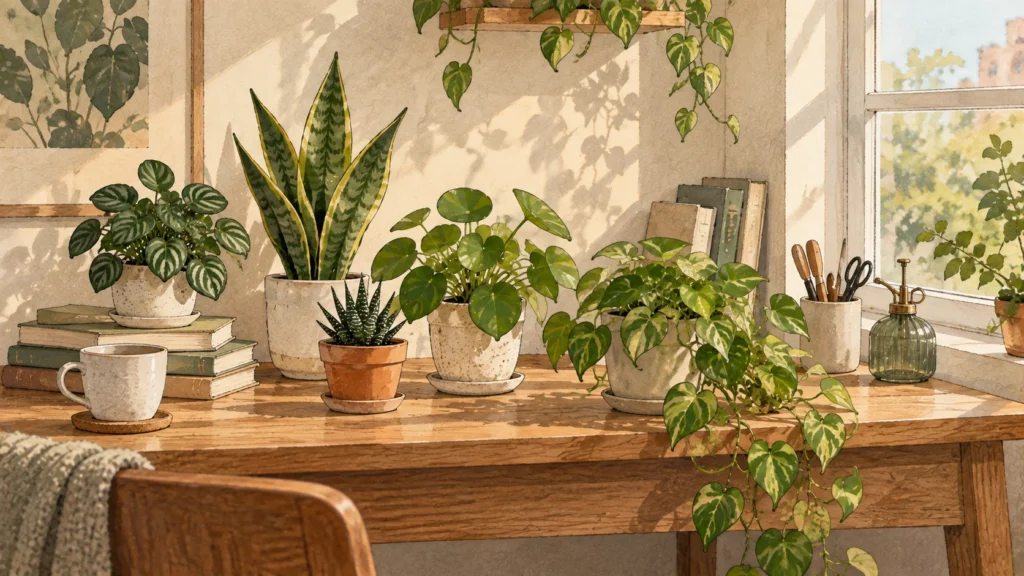
The best indoor plants for small planters are not necessarily the smallest plants you can find. They are the ones whose growth habit, light requirements, and watering needs make sense for the space you actually have.
Peperomia, Haworthia, Pilea, compact snake plants, Fittonia, jade, and small pothos are all worth considering, but the right choice depends on your room as much as the plant itself.
If you’re new to indoor gardening, start with one or two. A small planter, a suitable spot, and a plant you can observe regularly are often enough to begin.
For the bigger picture, continue with our Ultimate Indoor Gardening Guide for Beginners and build from there.