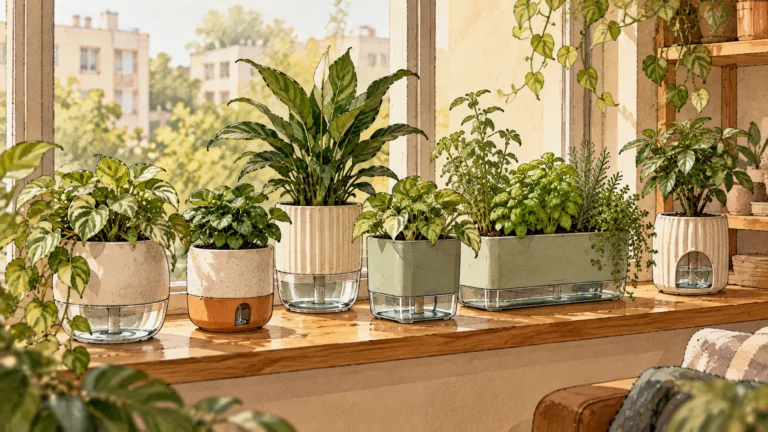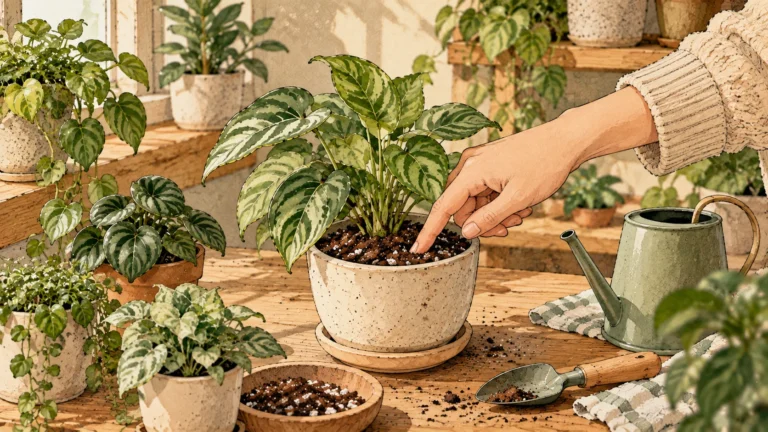
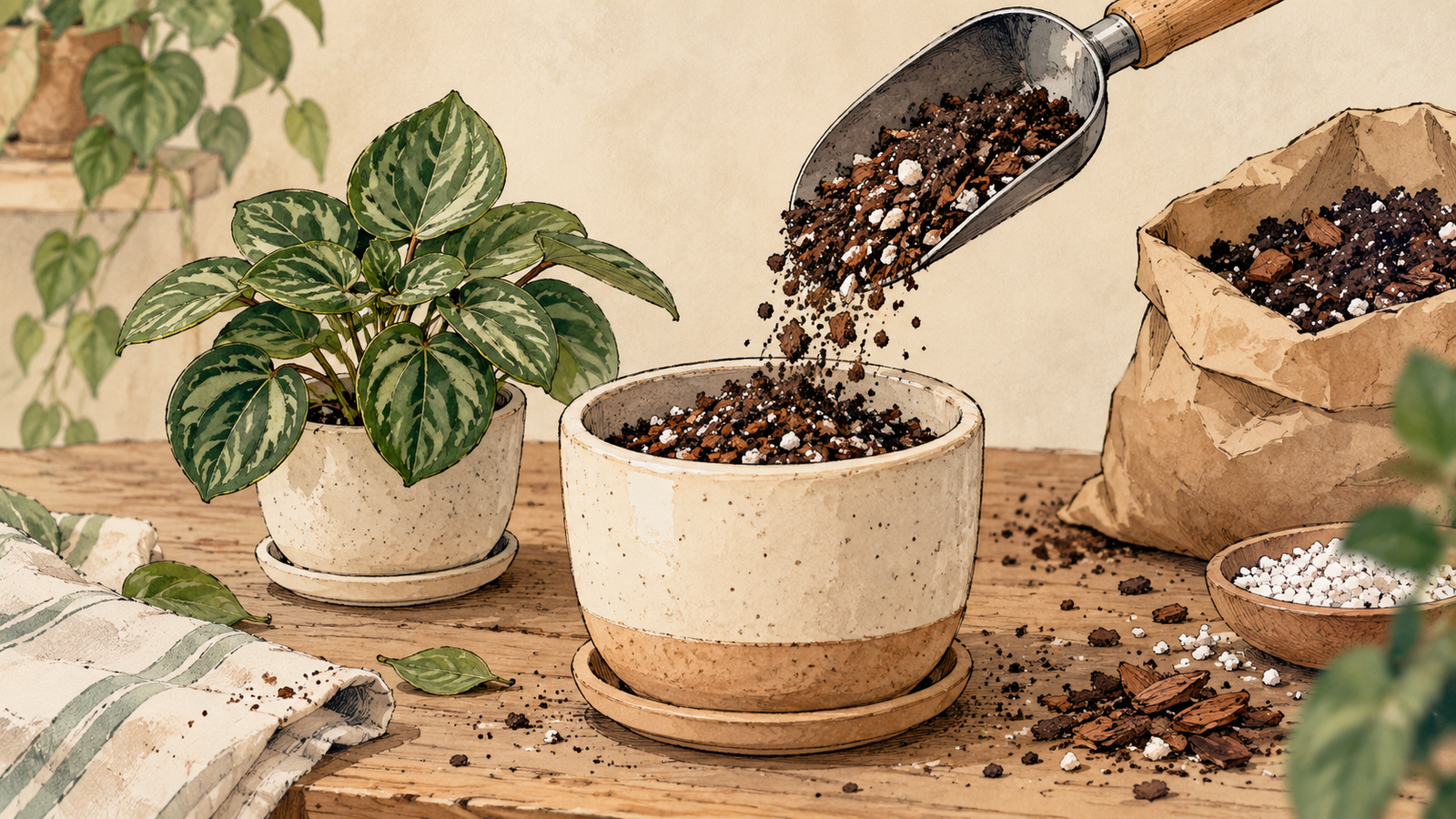
Best soil mix for indoor planters is not necessarily the richest or most complicated mix you can find. For a small indoor planter, what matters more is finding a growing medium that holds enough moisture while still allowing excess water and air to move through the root area.
This becomes especially important when the planter is small. There is less growing medium to work with, so changes in moisture can happen relatively quickly.
If you’re just getting started with indoor gardening, choosing the right mix is one of those small details that can make plant care easier. In our Indoor Gardening Guide for Beginners, we covered the basic setup; here, we’ll focus specifically on the growing medium.
What Makes a Good Indoor Potting Mix?
A useful potting mix generally needs to do three things:
- Hold enough moisture for the plant
- Allow excess water to drain
- Leave enough air around the roots
These needs can sometimes pull in different directions. A mix that holds too much water may stay wet for a long time, while one that drains extremely quickly may require more frequent watering.
For most common houseplants, a balanced indoor potting mix can be a reasonable starting point. More specialized plants may need something different.
The important part is to think about the plant, planter, and growing conditions together rather than looking for one universal recipe.
Why Garden Soil Usually Isn’t the Best Choice
It may seem logical to fill a small planter with soil from the garden, but container growing is different from growing directly in the ground.
Garden soil can become compacted inside a container and may not provide the drainage and aeration that indoor plant roots need. It can also introduce unwanted pests or disease organisms into an indoor environment.
For that reason, a commercial potting mix designed for containers is generally a simpler starting point for indoor plants.
You don’t necessarily need the most expensive bag on the shelf. Look for a product intended for indoor or container plants and pay attention to its ingredients and the plants it is designed for.
Understanding the Main Ingredients
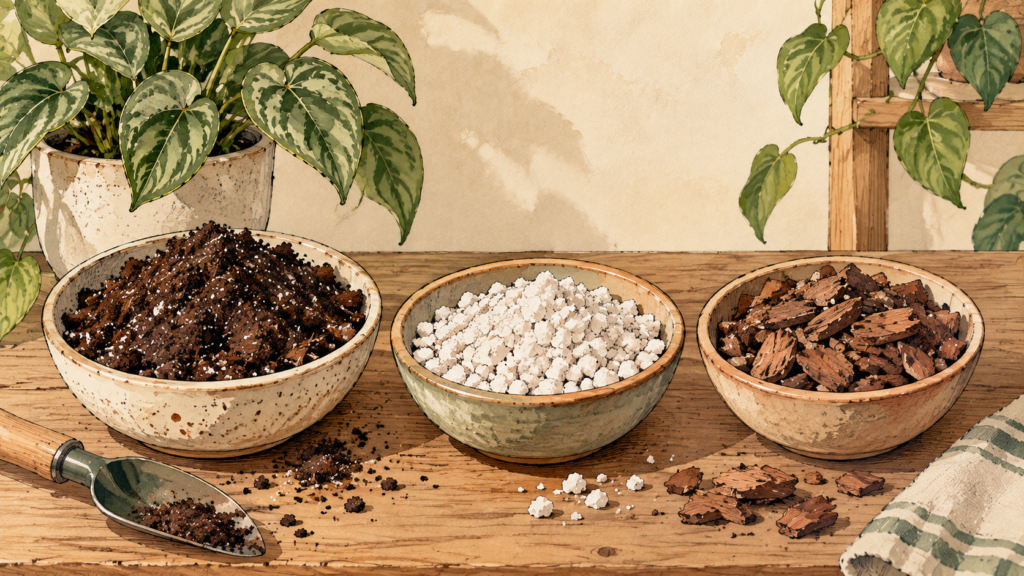
You will often see several ingredients mentioned when shopping for potting mix. Each serves a slightly different purpose.
Peat Moss or Coconut Coir
Peat moss and coconut coir can help a growing medium retain moisture.
Coir is commonly used in soilless mixes, while peat has long been used in container growing. Neither should automatically be treated as the “best” ingredient on its own. What matters is how the complete mix behaves.
Perlite
Perlite is the lightweight white material commonly seen in many potting mixes.
It helps create spaces within the growing medium and can improve drainage and aeration.
For plants that are sensitive to constantly wet roots, adding some perlite to a suitable base mix may be useful.
Vermiculite
Vermiculite can also be found in some potting mixes. It has a greater tendency to retain moisture than perlite, so it is used differently depending on the type of plant and growing medium.
You don’t need to buy every amendment separately when you’re starting out. A ready-made indoor mix may already contain a combination of these materials.
Bark
Small pieces of bark are often included in chunkier mixes.
They can create larger air spaces and are particularly common in mixes designed for plants that prefer a more open growing medium.
This can be useful for certain tropical plants and other species with specific root requirements, but it isn’t automatically necessary for every small planter.
How to Choose the Best Soil Mix for Indoor Planters
The easiest way to choose a mix is to start with the plant rather than the soil bag.
Ask three simple questions:
What type of plant am I growing?
A succulent, tropical foliage plant, and orchid can have very different moisture and aeration preferences.
How quickly does the planter dry?
A small pot placed near a bright window may dry much faster than a similar pot sitting in a cooler, lower-light room.
How often do I realistically want to water?
Your routine matters too. A plant that needs consistently moist conditions may not be a good match if you frequently forget to check it.
This approach is generally more useful than looking for a single “perfect” soil mix.
Best Soil Mix for Indoor Planters by Plant Type
A simple way to think about it is:
Common foliage plants:
A quality general indoor potting mix is often a reasonable starting point.
Succulents and cacti:
A faster-draining mix is generally more appropriate because these plants usually prefer less persistent moisture around their roots.
Tropical plants:
Many can work with a moisture-retentive but airy mix. Some varieties may benefit from a chunkier blend.
Orchids:
Orchids are a special case and are commonly grown in bark-based media rather than ordinary houseplant potting mix.
These are broad categories, not strict rules. Individual species can have different preferences, so checking the requirements of the particular plant is still worthwhile.
Does a Small Planter Need a Special Soil Mix?
Not necessarily.
A small planter does not automatically require a complicated soil recipe.
In many cases, a good-quality indoor potting mix is enough to get started. The more important question is whether the mix dries at a reasonable rate for the plant and the location.
Small containers can have less room for error because there is a limited amount of growing medium. If the mix stays wet for too long, the roots may remain in an overly saturated environment. If it dries extremely quickly, the plant may need more frequent attention.
That is why the same mix can behave differently in different homes.
Don’t Forget the Planter’s Drainage
Soil and planter selection really belong in the same conversation.
Even a good potting mix can become difficult to manage if excess water has nowhere to go.
For most indoor plants, a container with a drainage hole provides a straightforward way for excess water to leave the pot. Penn State Extension specifically recommends drainage holes and notes that decorative cachepots can be used around a separate growing pot.
This is particularly practical for small indoor planters.
If you like a decorative pot without a drainage hole, you can often keep the plant in a nursery pot with drainage and place that inside the decorative container.
Just remember to avoid leaving excess water sitting in the outer container.
Should You Put Gravel at the Bottom of a Small Planter?
This is a common gardening question.
A layer of gravel or stones at the bottom is sometimes suggested as a way to improve drainage. However, Penn State Extension’s guidance specifically advises against using a coarse drainage layer underneath the potting mix, explaining that it can actually interfere with water movement rather than improve it.
For a small indoor planter, the simpler approach is usually better:
Use an appropriate potting mix and provide a proper drainage hole.
You don’t need to fill valuable space in a small container with gravel.
When Should You Adjust Your Potting Mix?
You don’t need to change a potting mix simply because someone online recommends a particular recipe.
Instead, watch how your plant and planter behave.
You might consider adjusting the mix when:
- The growing medium stays wet for an unusually long time
- Water runs through extremely quickly
- The plant’s specific requirements call for a different medium
- The mix has become compacted
- You are growing a plant with specialized root requirements
For example, adding perlite may help create a more open mix, while a moisture-retaining component may be useful for plants that dry out too quickly.
The goal is not to create the most complicated mixture. It is to create a root environment that suits the plant.
A Simple Starting Mix for Beginners
If you’re new to indoor gardening, you can keep this part simple.
Start with a quality indoor potting mix designed for container plants.
For many common foliage plants, this may be enough on its own.
If the mix appears too dense or stays wet for too long, you can consider adding an aeration material such as perlite. For plants with more specialized requirements, choose a mix made for that plant type rather than modifying a general mix without a clear reason.
Commercial potting mixes can already contain combinations of materials such as peat or coir, perlite, bark, and other components, so there is no need to recreate a professional growing medium from scratch.
Common Soil Mistakes to Avoid
A few simple mistakes are easy to make with small indoor planters.
Using Garden Soil
It can become dense and poorly suited to containers.
Choosing a Mix Only by Appearance
Dark, rich-looking soil is not automatically the right choice for your plant.
Adding Too Many Amendments
More ingredients do not necessarily create a better growing medium.
Ignoring the Plant’s Needs
A succulent and a moisture-loving tropical plant should not automatically receive the same mix.
Forgetting Drainage
The soil and planter need to work together.
Final Thoughts
Choosing the best soil mix for indoor planters doesn’t have to become a complicated gardening project.
For most beginners, a good-quality indoor potting mix is a sensible place to start. From there, pay attention to how quickly the mix dries, how your plant responds, and whether its particular needs call for something different.
The right growing medium is less about finding a magical recipe and more about creating a comfortable environment for the roots.
Start simple, observe how the planter behaves, and adjust only when there is a reason to do so.
For the broader fundamentals of choosing plants, light, watering, and containers, return to the Ultimate Indoor Gardening Guide for Beginners.